
.svg)
Log depth vs SOC coverage, what to choose when budget is limited
Introduction
When an MSP or IT team needs to optimize costs, a common question comes up: should you keep advanced Microsoft Defender licenses, or reallocate part of the budget to a SOC like Noxio?
The answer is not purely technical. It comes down to a tradeoff between data depth and the ability to act on it.
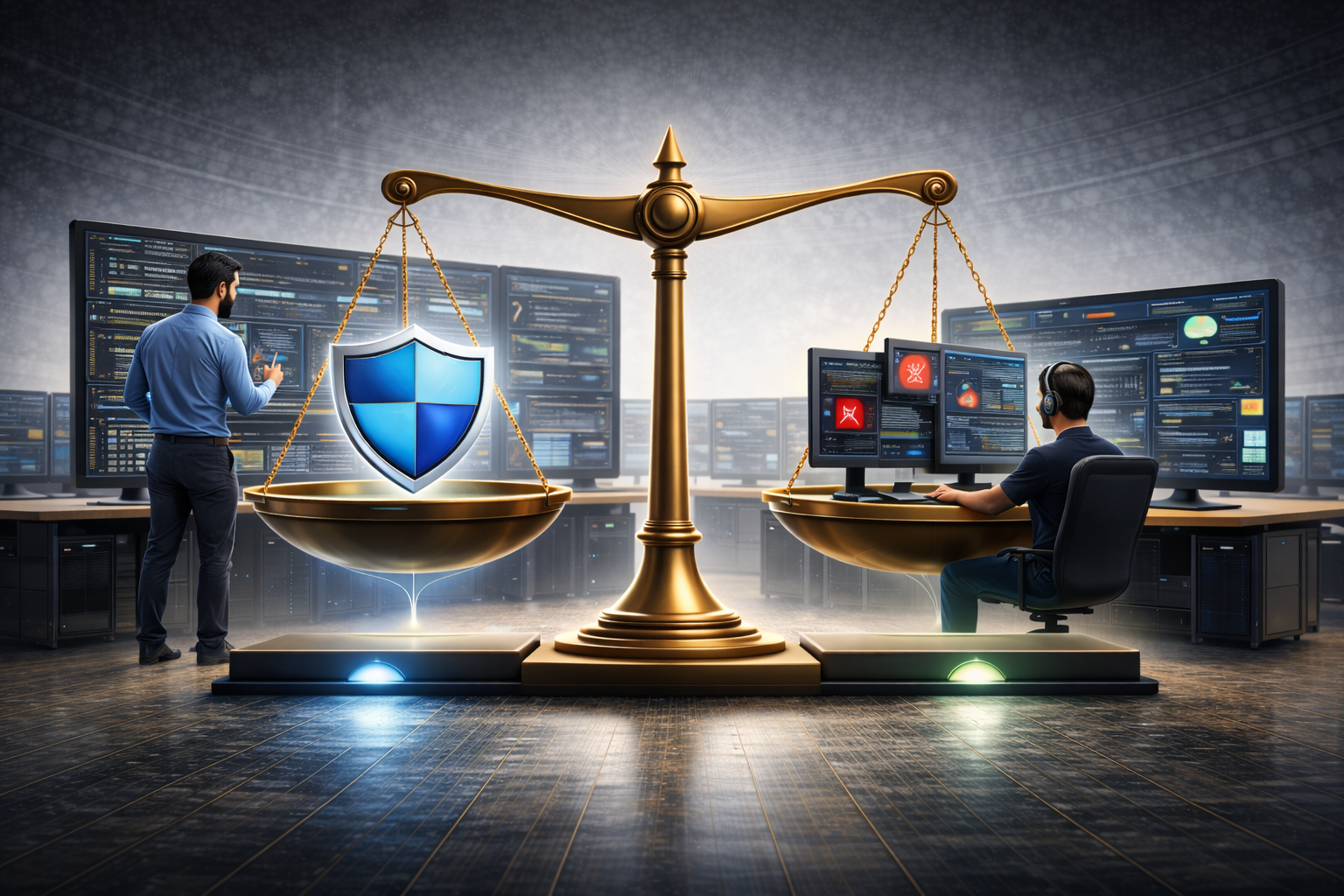
Log depth vs SOC coverage
Advanced Microsoft licensing improves depth. It provides more telemetry, more context, and stronger native correlations within the Microsoft ecosystem.
A SOC improves coverage. It collects signals from multiple sources, correlates events, filters noise, and most importantly, takes action.
This is not a comparison of equivalent solutions, but two different approaches to security.
What advanced licensing provides
A more complete Defender setup gives you:
- More detailed visibility into incidents
- Native correlation across endpoint, identity, and email
- More data for investigation and analysis
This depth only delivers value if someone actively uses it.
Without resources to monitor and respond, much of that value remains unused.
What a SOC provides
A SOC turns detection into action.
It provides:
- Continuous monitoring
- Alert triage
- Incident prioritization
- Response capability
For organizations without a dedicated security team, this operational layer is critical.
The key point
A SOC does not replace Microsoft.
It works with the data it receives.
If licensing is reduced:
- Data depth decreases
- The SOC has less context
- Correlation still works, but with less richness
So no, it is not equivalent.
The real financial tradeoff
When a client replaces part of their licensing with a SOC, they are making a tradeoff:
- Less technical depth
- More operational capability
In many SMB environments, this is a strong trade.
Having someone actively monitoring and responding often matters more than having advanced features that are not used.
The right question for MSPs
The real question is not:
Which solution is more advanced?
It is:
What actually protects the client day to day?
If the client has a mature internal team, advanced licensing makes sense.
If not, a SOC often delivers more real-world value.
Simple way to explain it
Licensing improves detection.
A SOC ensures someone acts on it.
Conclusion
Log depth improves visibility.
SOC coverage improves the ability to act.
When budget is limited, the best choice is often the one that turns security into real action, not just more features.
.jpg)
.jpg)